Across Instagram and TikTok, influencers and would-be content creators are churning out low-effort prank and pickup artist videos using the discreet recording features of Meta Ray-Bans and other smart glasses. Many of these clips cross from cringe into outright troubling, with creators harassing women, service workers, and the homeless. In some videos, creators pretend to be mentally disabled, trans, or gay just to provoke reactions from unsuspecting people.
All of these videos have one thing in common: They show that anyone can become the unwitting star of someone else’s social media video. Consent doesn’t enter into it at all.
The glasses’ inconspicuous nature is used to create all kinds of content that regularly pulls in hundreds of thousands of views on Instagram and TikTok. The severity and intrusiveness vary from creator to creator. Some accounts produce more positive content, sometimes referred to as “joybait,” by complimenting strangers.
Other videos cross over into outright harassment. Some focus specifically on trying to get women’s phone numbers, with comment sections often dogpiling on the women based on how receptive or unreceptive they are to the advance. The BBC recently documented multiple cases in which women were approached by men wearing smart glasses, unknowingly recorded, and later subjected to sexualized and abusive comments online. Other accounts center on smaller but deliberately irritating interactions, like saying nonsense to a drive-thru worker, trapping cashiers in circular conversations, or showing up minutes before a store closes to try and place a large order.
“I know it’s legal. I don’t care…That’s not the discussion. I think it’s weird and creepy, and it shows a very predatory mindset.”
The general setup is largely the same: go to a public place and say or do something intentionally off-putting solely to elicit a reaction. In one recurring example, a creator has posted multiple videos approaching women in beauty supply stores like Ulta or James Avery and pretending to shop for a gift for an underage girlfriend.
However, other accounts lean into far more socially transgressive behavior. Accounts like kemobandz1 and bootyworshipping produce sexually suggestive content involving unsuspecting women. The former records himself inside massage parlors, teasing viewers through captions that his visit will end in a sexual experience, later uploading the full videos as explicit pay-per-view content on sites like No Fans. (This has also been documented by 404 Media.) The latter account is largely self-explanatory, with the creator’s Reels page filled with videos of him non-consensually filming women’s bodies and posting the footage to Instagram for thousands of views.
While reporting this article, I contacted Meta about the ways its smart glasses are being used. After I provided multiple examples, including the two accounts mentioned above, Meta disabled the Instagram accounts for violating its policy on Adult Sexual Exploitation.
In a statement, a Meta spokesperson said that users “are responsible for complying with all applicable laws and for using Ray-Ban Meta glasses in a safe, respectful manner.” It continued, “as with any recording device, people shouldn’t use them for engaging in harmful activities like harassment, infringing on privacy rights, or capturing sensitive information.”
According to a Reuters report, Meta has sold more than 2 million pairs of smart glasses since the product’s launch in 2023, with sales tripling in 2025.
Legal doesn’t mean ethical
Credit: Screenshot courtesy of TikTok
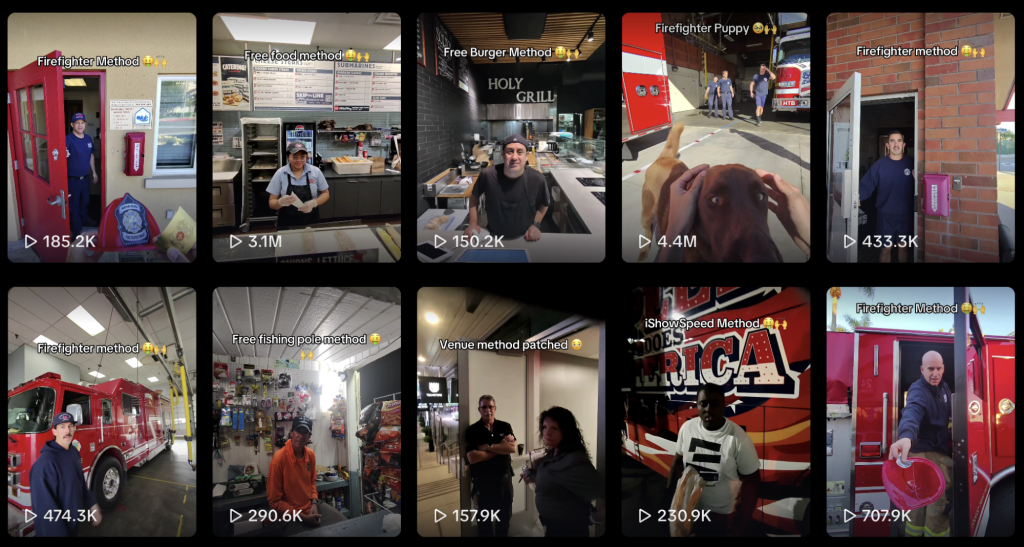
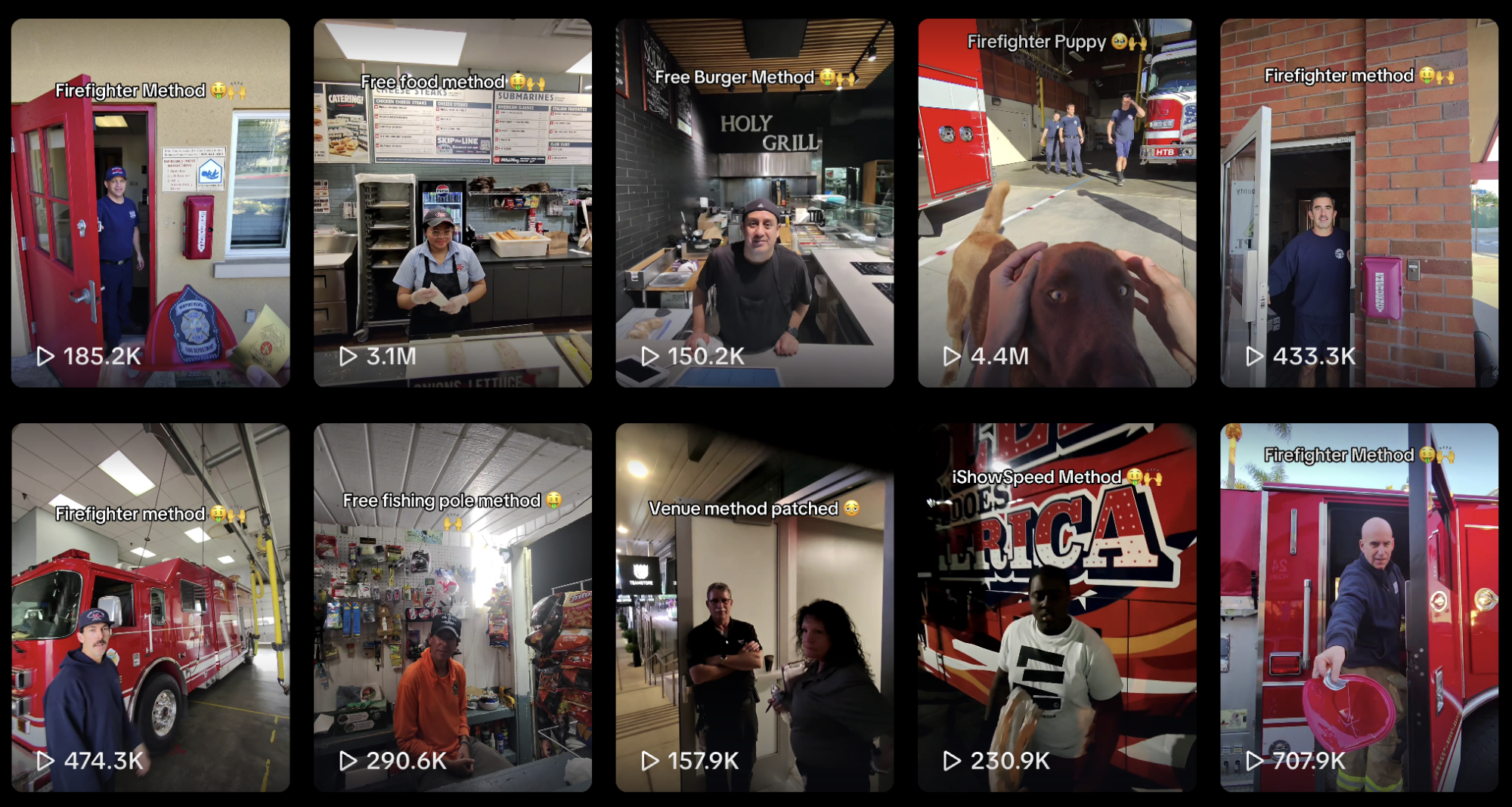
Crucially, these activities, whether it’s rizz accounts, hassling service workers, or pretending to be mentally disabled to exploit the kindness of firefighters, don’t break the law.
“[The] law has not changed, meaning that you do not have an expectation of privacy in public spaces,” said Julian Sarafian, a California-based attorney who represents online content creators. “That means you can be recorded in those spaces and have limited legal recourse, if any, against people who publish content that includes you.”
According to Sarafian, even when it’s not immediately obvious that cameras are present, the focus of any legal claim is where the recording takes place. That’s why many of these videos are filmed in fast food restaurants, shopping malls, or on busy streets around bars and nightlife areas.
“Some states, like California, are also two-party consent states, meaning that recording conversations where there is a reasonable expectation of privacy is not allowed unless both parties consent,” Sarafian said. “With prank videos, it comes down to context. A public park? No two-party consent required. A private dining room in a restaurant? Two-party consent required.”
But for some creators and observers, the fact that this content is legal misses the point entirely.
Brad Podray, a content creator who formerly went by the name Scumbag Dad, argues that videos filmed with smart glasses rely on people, particularly women, not knowing they are being recorded. In his view, legality has become a convenient shield for predatory and exploitative behavior.
“I know it’s legal. I don’t care,” Brad said. “That’s not the discussion. I think it’s weird and creepy, and it shows a very predatory mindset.”
According to Podray, the issue is not whether filming in public is technically legal, but how creators extract value from people who never consented to being part of the content. He describes this dynamic as turning unsuspecting subjects into unpaid labor.
Mashable Trend Report
He added that creators gravitate toward women and service workers because they are more likely to produce usable reactions and less likely to push back in ways that threaten the content.
“I always thought that was very cowardly, because the women don’t know they’re on camera,” said Podray, who has made several satirical, staged videos critiquing this type of behavior. “The women would roll into the comments section once the video went viral and say, ‘I was just being nice, I wanted you to leave me alone,’ and then the comments would absolutely dogpile them.”
Podray says the appeal of smart glasses is not just their discretion, but how cheaply and efficiently they allow creators to produce content at scale. Because the people being filmed are not acting, their reactions feel more authentic, which he says makes the videos perform better with audiences.
“They want people who are good on camera, so they’re going to hit fast food employees, and they’re going to hit pretty girls,” Podray said. “A lot of random women walking around aren’t going to want to participate in a skit if you ask them to, so they remove the agency entirely by just running the glasses.”
He argues that this dynamic is rarely understood by viewers, who often assume everyone on camera has agreed to participate. When those assumptions are challenged, he says the response is frequently hostile.
“The audience believes everybody on camera is an actor meant for their entertainment,” he said. “Any attempt to humanize them is met with cynicism or outright aggressiveness.”
For Podray, that disconnect is what makes the trend so troubling. The law allows creators to film in public, and creeps know it.
Creators say it’s just “entertainment”
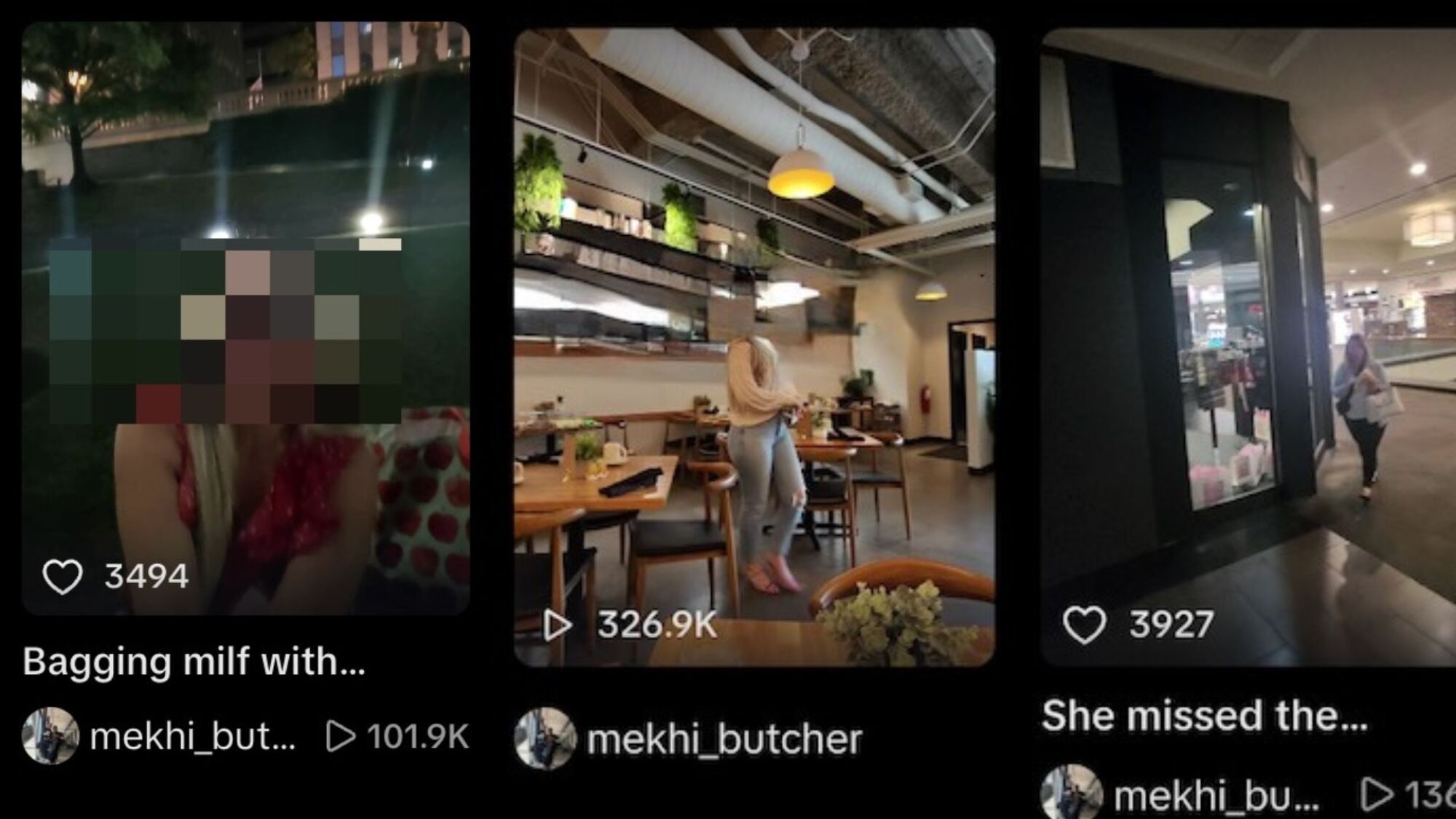
Image pixelated and blurred for privacy reasons.
Credit: Screenshot courtesy of TikTok
Troll content like prank channels or pickup artist videos is nothing new. For a time, prank channels were among the most popular on YouTube, starting with prank-call-focused channels like Ownage Pranks. As technology evolved and smartphones became more widespread, prank creators shifted toward street content, with channels like Roman Atwood, fouseyTUBE, and LAHWF gaining massive followings.
Over time, prank channels on YouTube began to fall out of favor as larger creators pushed increasingly outrageous stunts for views. It also became clear that many of these channels were hiring actors or staging their content, undermining the original appeal of pranks that were supposedly spontaneous and authentic.
Smart glasses have made it easier than ever to capture the kind of authentic, outlandish reactions that largely disappeared when YouTube prank channels fell out of favor. While Meta Ray-Ban smart glasses include an LED indicator meant to signal when recording is taking place, outlets like 404 Media have reported that wearers can pay third-party services to disable the light. Some creators, including accounts like minddecaycam, have openly admitted to blocking the indicator light.
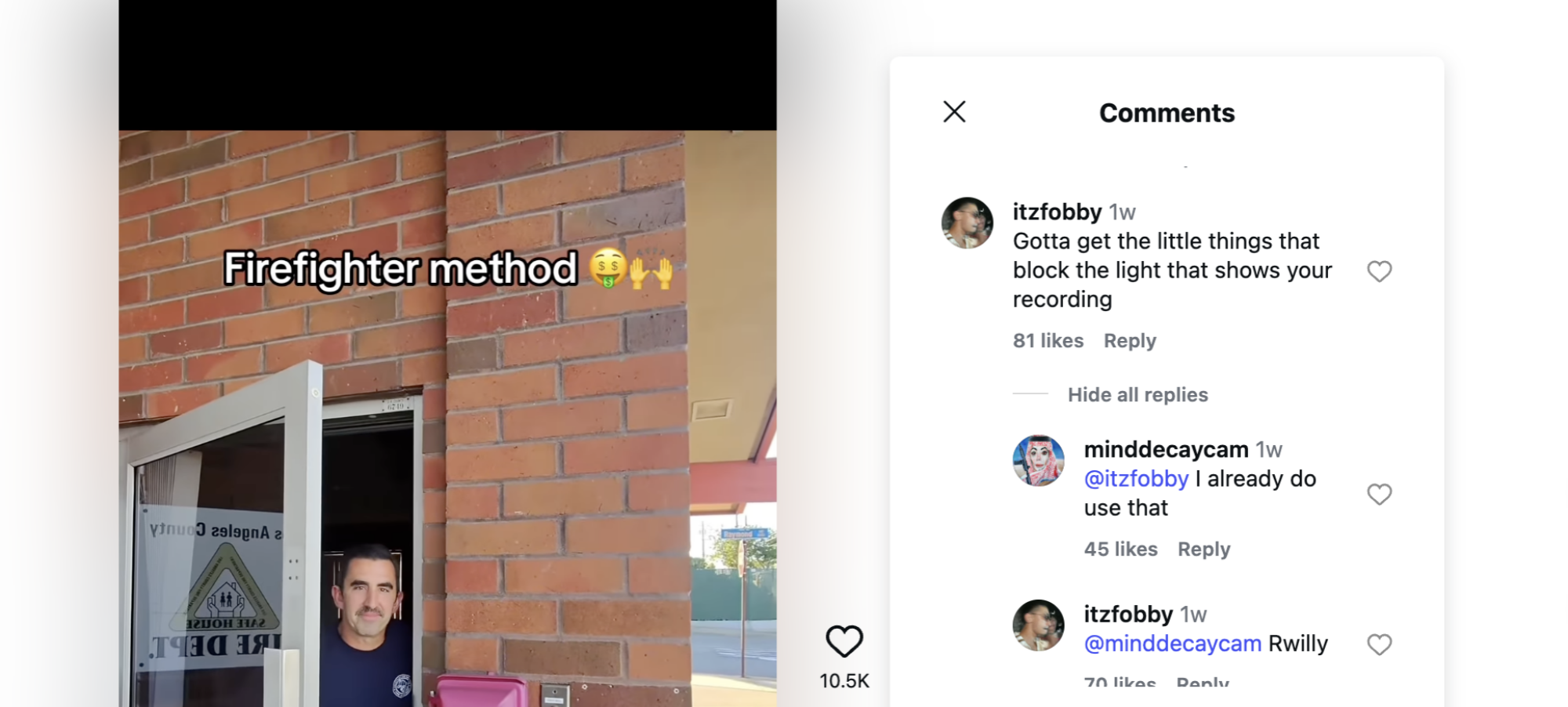
A screenshot from a recent @minddecaycam video.
Credit: Screenshot courtesy of Instagram
Mashable reached out to several smart glasses creators for comment. While many did not respond in time for publication, one account, HeyMetaGuy, said he views his content as entertainment first.
“Realistically, I’ve made a few other pages for things that are not in the same field, but I just saw content in this way,” HeyMetaGuy said. “I was like, I want to make content like this myself, because I know how to edit and whatnot, and just generally pranking people, messing with people, getting their reactions is cool.”
When asked about the ethics of filming people who may not realize they’re being recorded, HeyMetaGuy compared the practice to the everyday surveillance already present in public life.
“For the ethical standpoint, I believe no matter where we go nowadays, we’re being recorded,” he said. “Whether you walk into an establishment, there’s security cameras everywhere. We’re being recorded.”
HeyMetaGuy said he does not disable the LED indicator on his glasses, though he acknowledged that most people don’t understand what the light signifies when they notice it.
“It’s not really hidden,” he said. “It’s just more the fact that people don’t know what’s going on. Like, when they see a light, they don’t really know what’s going on.”
HeyMetaGuy added that while most people he records laugh about his trolling, he has faced at least one threat of legal action, but he states that filming in public places is clearly permitted.
A serious threat to privacy
For privacy and civil liberties advocates, that growing adoption raises deeper concerns about how easily wearable cameras can blend into everyday life. Jake Laperruque, the deputy director of the Security and Surveillance Project at the Center for Democracy and Technology, said the rise of prank and “social experiment” content filmed with smart glasses highlights how difficult it is to recognize these devices in use.
“It’s very concerning that these and other interactions seem to show these glasses are too inconspicuous to be recognized when they’re recording people,” Laperruque said. “Being able to easily buy and use tech to secretly record people creates serious dangers.”
While Laperruque does not believe wearable cameras represent a fundamental shift in surveillance culture just yet, he said pushback may come from the public rather than lawmakers.
“People and places of public accommodation might decide this isn’t the type of social engagement they want and push back,” he said, adding that he would not be surprised if gyms, bars, and other businesses began banning wearable recording devices altogether.
Looking ahead, Laperruque said the biggest concern is how discreet recording could intersect with other technologies.
“I’m most worried about the risk of people wanting anonymity in sensitive situations and being doxxed,” he said. “If devices are able to record secretly and combined with facial recognition, it could be a serious threat to privacy and civil liberties.”